
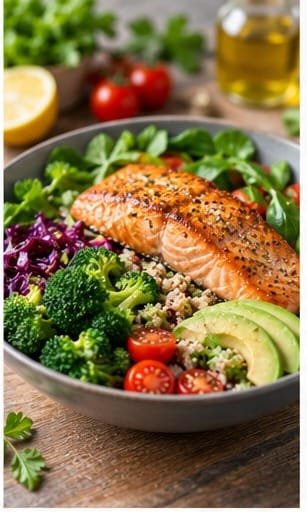
Your forties and beyond can be an excellent time to pay closer attention to heart health.
You do not need a complicated diet plan to eat well. In most cases, improving your overall eating pattern matters more than searching for a single “superfood”.
Key Takeaway
Heart-healthy eating does not require perfection. Build meals around plants, whole grains, healthy protein and unsaturated fats, keep salt and highly processed foods in check, and create an overall pattern you enjoy and can maintain.
Build Meals Around Plants
Vegetables and fruit provide fibre and a wide range of nutrients.
Try to include different colours throughout the week. Fresh, frozen and canned options can all be useful, particularly when canned products have no unnecessary added salt or sugar.
Choose Whole Grains More Often
Whole-grain foods can be more filling and provide more fibre than highly refined alternatives.
Examples include:
- Oats
- Wholemeal bread
- Brown rice
- Whole-grain pasta
- Barley
You do not have to replace every refined grain immediately. Gradual changes are often easier to maintain.
Include Healthy Protein Sources
Useful protein choices may include:
- Fish
- Beans
- Lentils
- Eggs
- Poultry
- Unsalted nuts and seeds
Oily fish can also provide omega-3 fats. For more ideas, see our high-protein meal guide.
Choose Unsaturated Fats
Not all fats affect health in the same way.
Foods such as olive oil, nuts, seeds and avocado can provide unsaturated fats. Rather than trying to remove all fat from your diet, focus on improving the types of fats you eat most often.
Reduce Excess Salt
Eating too much salt can contribute to high blood pressure.
Many people consume salt through packaged and processed foods rather than from the salt shaker alone. Checking food labels can help you compare products.
Limit Foods High in Saturated Fat and Added Sugar
This does not mean banning treats forever.
A practical approach is to make nutritious foods the foundation of your diet while keeping highly processed foods and sugary drinks as occasional choices.
Mediterranean and DASH-Style Eating
The Mediterranean and DASH eating patterns both emphasise foods such as vegetables, fruit, whole grains, legumes and lean protein.
The DASH approach was developed with blood pressure in mind and encourages a balanced pattern while limiting excessive sodium.
A Simple Plate Formula
For many meals, try thinking in proportions:
- Fill a large part of the plate with vegetables.
- Include a source of protein.
- Add a whole-grain or other high-fibre carbohydrate.
- Include a modest amount of healthy fat.
This approach is flexible enough to work with many different cultural cuisines. Our weekly meal planning guide shows how to turn it into a routine.
The Bottom Line
Heart-healthy eating does not require perfection. The goal is to create an overall eating pattern you enjoy and can maintain.
Frequently Asked Questions
How much salt should adults eat?
The NHS advises adults to have no more than 6 g of salt a day (about one teaspoon), counting the salt already in packaged foods, bread and sauces. Comparing food labels makes this easier.
How often should I eat oily fish?
Health services such as the NHS suggest eating at least two portions of fish a week, including one of oily fish such as salmon, mackerel or sardines, unless your healthcare professional advises otherwise.
Is the DASH eating pattern only for people with high blood pressure?
No. DASH was designed with blood pressure in mind, but its emphasis on vegetables, fruit, whole grains, legumes and lean protein makes it a sensible everyday pattern for most adults.
Related Reading and Authoritative Sources
- Best Foods for Weight Loss After 40
- 10 Habits That Support a Longer, Healthier Life
- American Heart Association — Healthy eating
- NHS — Eat well
- National Institute on Aging — Healthy ageing
See also: Heart Health After 40: How to Protect Your Blood Pressure.
See also: Blood Pressure After 40: Why Regular Checks Matter.