
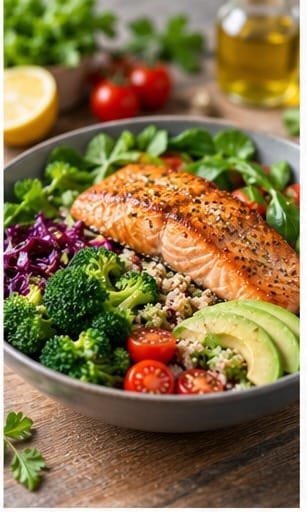
There is no magic “fat-burning” food. But some foods make healthy eating easier because they keep you full, provide steady energy and support muscle — all useful when you are managing your weight after 40.
Key Takeaway
Build meals around protein, vegetables, fibre-rich carbohydrates and healthy fats. Foods that are minimally processed and high in protein or fibre tend to be the most filling per calorie.
1. Protein-rich foods
Eggs, fish, poultry, Greek yoghurt, lentils, beans and tofu support fullness and muscle. See our high-protein meal guide for portions and meal ideas.
2. Vegetables and fruit
Leafy greens, broccoli, peppers, berries and apples add volume, fibre and nutrients for relatively few calories. Aim to fill half your plate with vegetables.
3. Whole grains and legumes
Oats, quinoa, brown rice, wholegrain bread, chickpeas and lentils release energy more slowly than refined carbohydrates, helping steady hunger between meals.
4. Healthy fats
Olive oil, avocado, nuts, seeds and oily fish (such as salmon) support heart health. Fats are calorie-dense, so measure portions — a small handful of nuts or a teaspoon or two of oil is usually enough.
5. Water and unsweetened drinks
Swapping sugary drinks for water, sparkling water or unsweetened tea is one of the simplest changes you can make.
A simple plate formula
- Half the plate: vegetables or salad
- A quarter: protein
- A quarter: whole grains or starchy vegetables
- A thumb-sized portion of healthy fat
Common mistakes
- Relying on “diet” products that are highly processed and leave you hungry.
- Cutting out entire food groups.
- Forgetting drinks and sauces, which can add hidden calories.
A simple shopping list to get started
Stocking your kitchen makes healthy choices the easy choice. A practical starter list: eggs, Greek yoghurt, tinned fish, chicken or tofu; lentils, chickpeas and beans; oats, brown rice and wholegrain bread; frozen vegetables, leafy salad, berries and apples; olive oil, nuts and seeds. Frozen and tinned options are just as nutritious as fresh and reduce waste, so they are ideal for busy weeks. Aim to build each meal from two or three items on this list rather than following a strict plan. If you want to go deeper, our weekly meal planning guide shows how to turn these ingredients into a week of meals.
Frequently asked questions
Are there foods that burn belly fat?
No food specifically burns belly fat. Fat loss comes from an overall sustainable calorie balance, supported by good nutrition, activity and sleep.
Is fruit bad for weight loss?
Whole fruit is nutritious and filling. Most people do not need to avoid it unless advised to by a healthcare professional.
Do I have to give up carbohydrates?
No. Choosing fibre-rich, minimally processed carbohydrates in sensible portions works well for most people.
Conclusion
Focus on adding more of the good stuff rather than banning foods. For more guidance, see the NHS Eat Well pages and our complete beginner guide.
See also: Healthy Hydration After 40: How to Build Better Drinking Habits.